We are processing your request.
Please, don’t close or refresh the page.
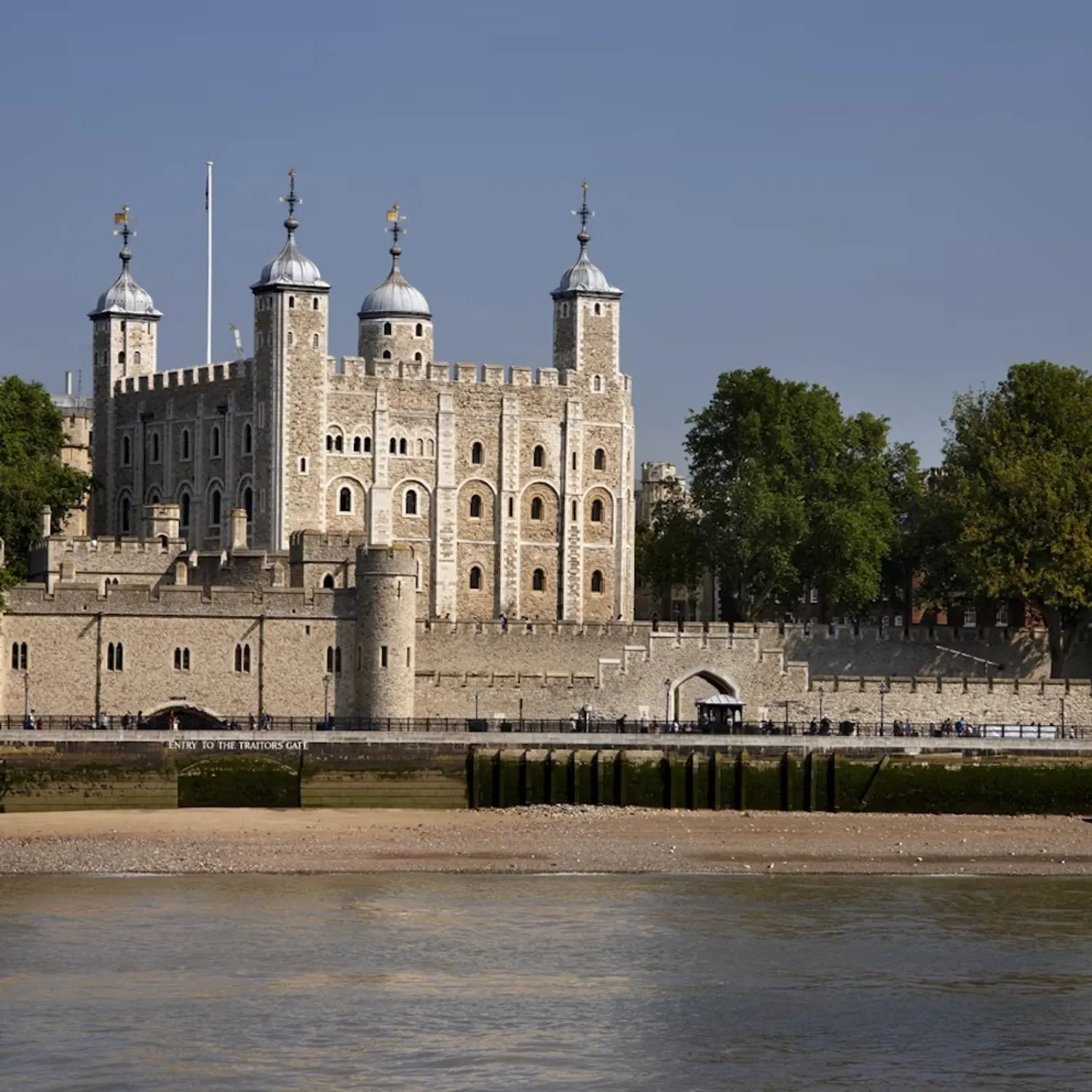
The Tower of London fortress walls

Inside the Tower of London: The White Tower, the Medieval Palace and the Prison Towers

Behind the walls you walk through the Norman White Tower with the Line of Kings and Henry VIII's armour, Edward I's rooms in the Medieval Palace, and the cells where prisoners carved their names into the stone.

What You Find Inside the Walls

The Tower of London is not one building but a walled cluster of them, and each tells a different part of the story. The Norman keep holds centuries of royal armour, the riverside towers have been dressed as the rooms a medieval king lived in, and the smaller towers along the walls are where prisoners waited, sometimes for years. All of it sits on a single admission ticket, alongside the Jewel House. The story of when the Tower of London was built and why William the Conqueror wanted it explains how the walls got there. Inside them, the walk runs from the Norman keep to the prisoners' cells.

Inside the White Tower: The Line of Kings and Henry VIII's Armour
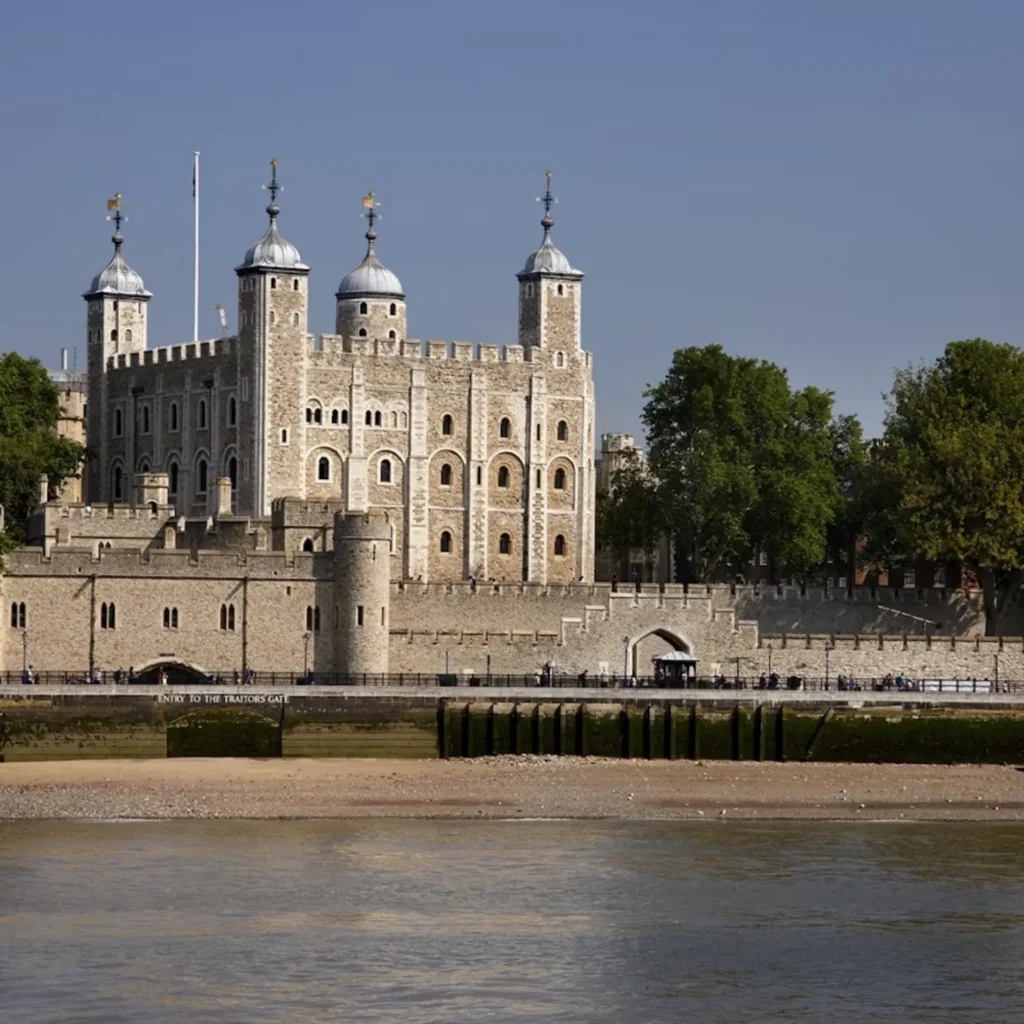
The Tower of London beside the Thames

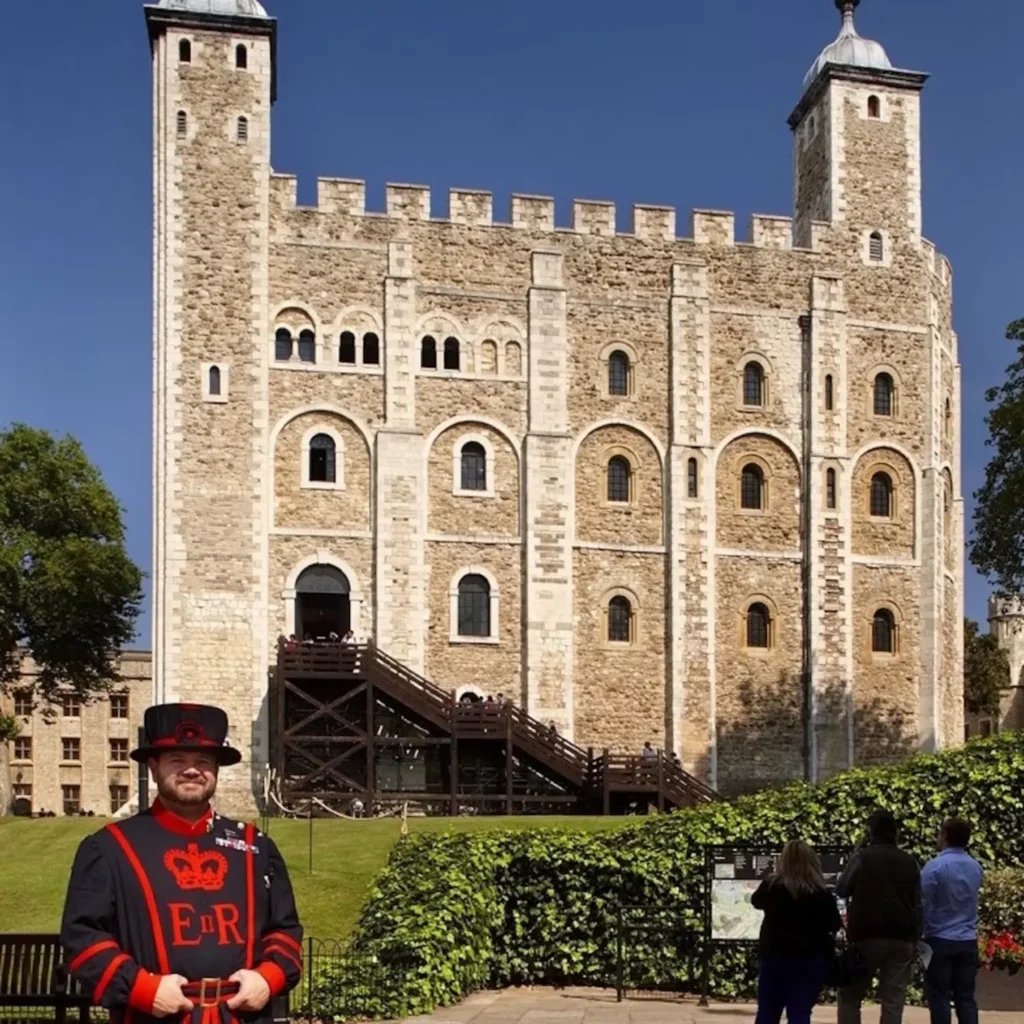
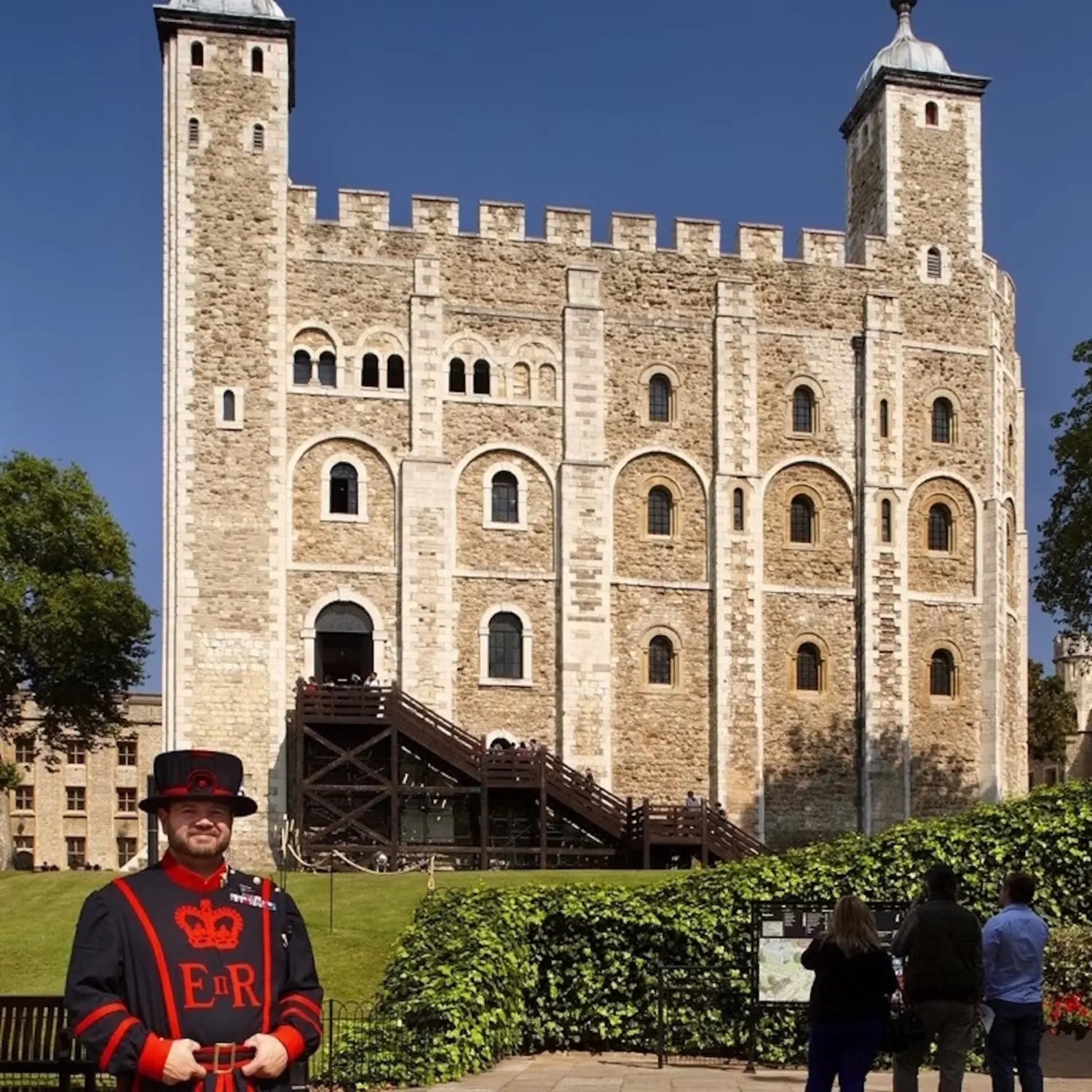
The White Tower is the Norman keep at the heart of the fortress, and today it is home to the Royal Armouries. Its best-known display, the Line of Kings, was created for Charles II after 1660 and is one of the earliest known museum exhibits in the world. Visitors have been walking past it for around 350 years.

The armour spans centuries. Henry VIII's tournament armour, made around 1510 to 1515, is the piece most people come looking for, and it sits alongside the gilded armours of Charles I and James II. There are stranger pieces too: suits labelled for a 'Giant' and a 'Dwarf', and a gift from the 'Great Mogul'.

On the upper floor is St John's Chapel, the Norman chapel built into the keep, once decorated for Henry III with a gold-painted cross and stained glass. Photography is not allowed in the chapel. The stairs through the White Tower are steep, and the lift on the north side only reaches the basement shop.

The Medieval Palace, Where the Kings Actually Lived
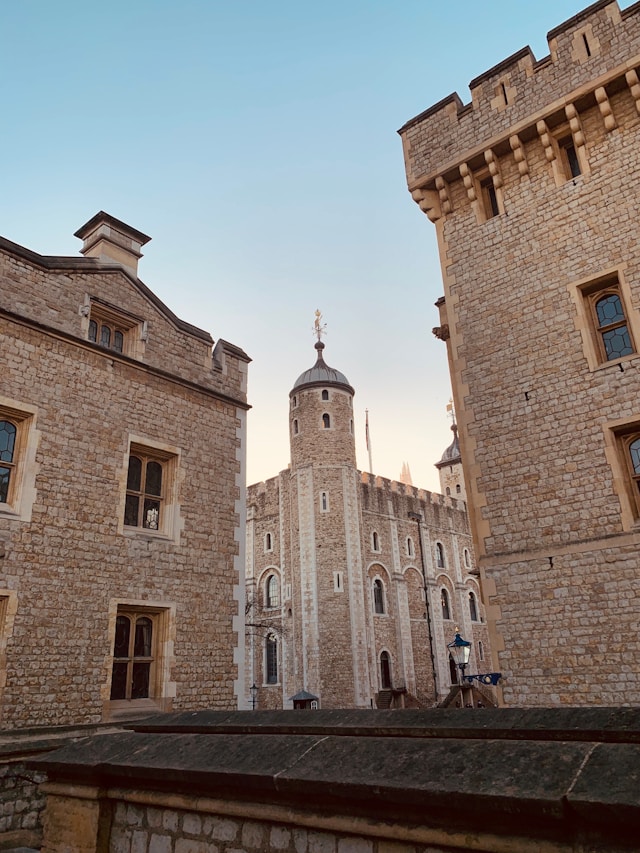
The Tower of London

The kings did not live in the White Tower for long. From the thirteenth century they moved into grander rooms along the river, and three of those towers now make up the Medieval Palace. St Thomas's Tower was built by Edward I between 1275 and 1279 as a riverside gatehouse, with Traitors' Gate beneath it.

Inside St Thomas's Tower you find the king's hall with its huge fireplace, hangings with the arms of England and Castile, and Edward I's bedchamber, recreated with period furnishings. There is even a medieval fish trap, a reminder of how close to the water the palace was.

Next door, the Wakefield Tower was part of Henry III's royal apartments and now holds a medieval throne, wall paintings above the fireplace and a painted chapel screen. It has a darker story as well: Henry VI was imprisoned here and probably murdered in 1471. The Lanthorn Tower, built in the 1220s and 1230s, shows smaller treasures, including a toy knight from around 1300.

The Bloody Tower and the Beauchamp Tower Carvings
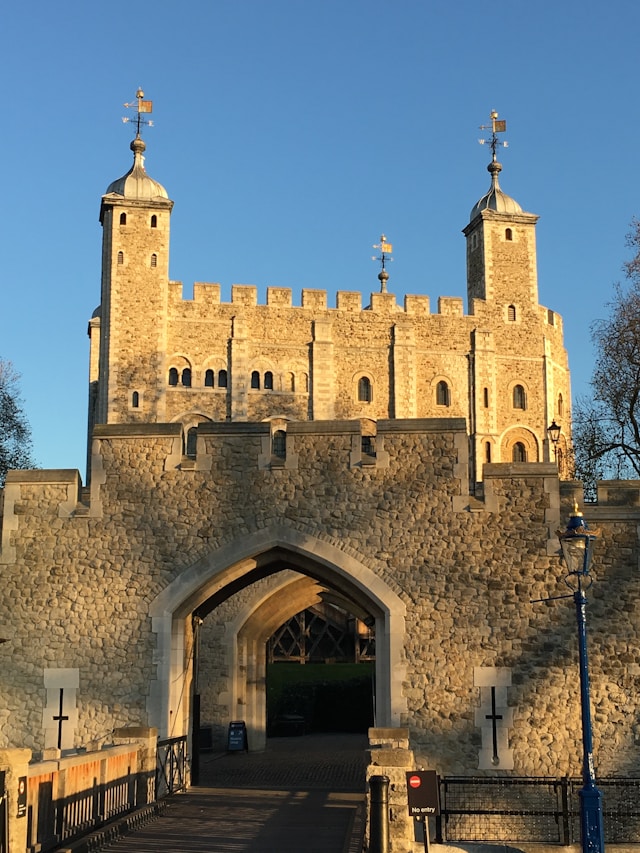
The Tower of London

The Bloody Tower started life as the Garden Tower. It was renamed after the disappearance of the young Edward V and his brother Richard in 1483, when rumours spread that the boys had been killed there. Its most famous long-term prisoner was Sir Walter Raleigh, held for 13 years under James I.

Raleigh's confinement was not a dungeon. He was allowed three servants, his rooms were partitioned to make them more comfortable for his family, and he spent his time on poetry and science, even brewing a herbal elixir on the spot. The rooms are dressed today to show how he lived, from the partitioned quarters to his scientific experiments.

A short walk away is the Beauchamp Tower, built around 1281 under Edward I, where prisoners carved their names and beliefs into the walls. Robert Dudley, the future Earl of Leicester, left intricate carvings of roses, carnations, oak leaves and honeysuckle; Katherine of Aragon's chaplain Thomas Abel carved a bell with his name; and Philip Howard, held for ten years, cut a line about affliction and glory.

Tower of London: An Iconic and Intriguing Location!

Highlights

Explore an iconic landmark steeped in political intrigue and royal history.

Discover the newly restored Medieval Palace showcasing stories of monarchs and their households.

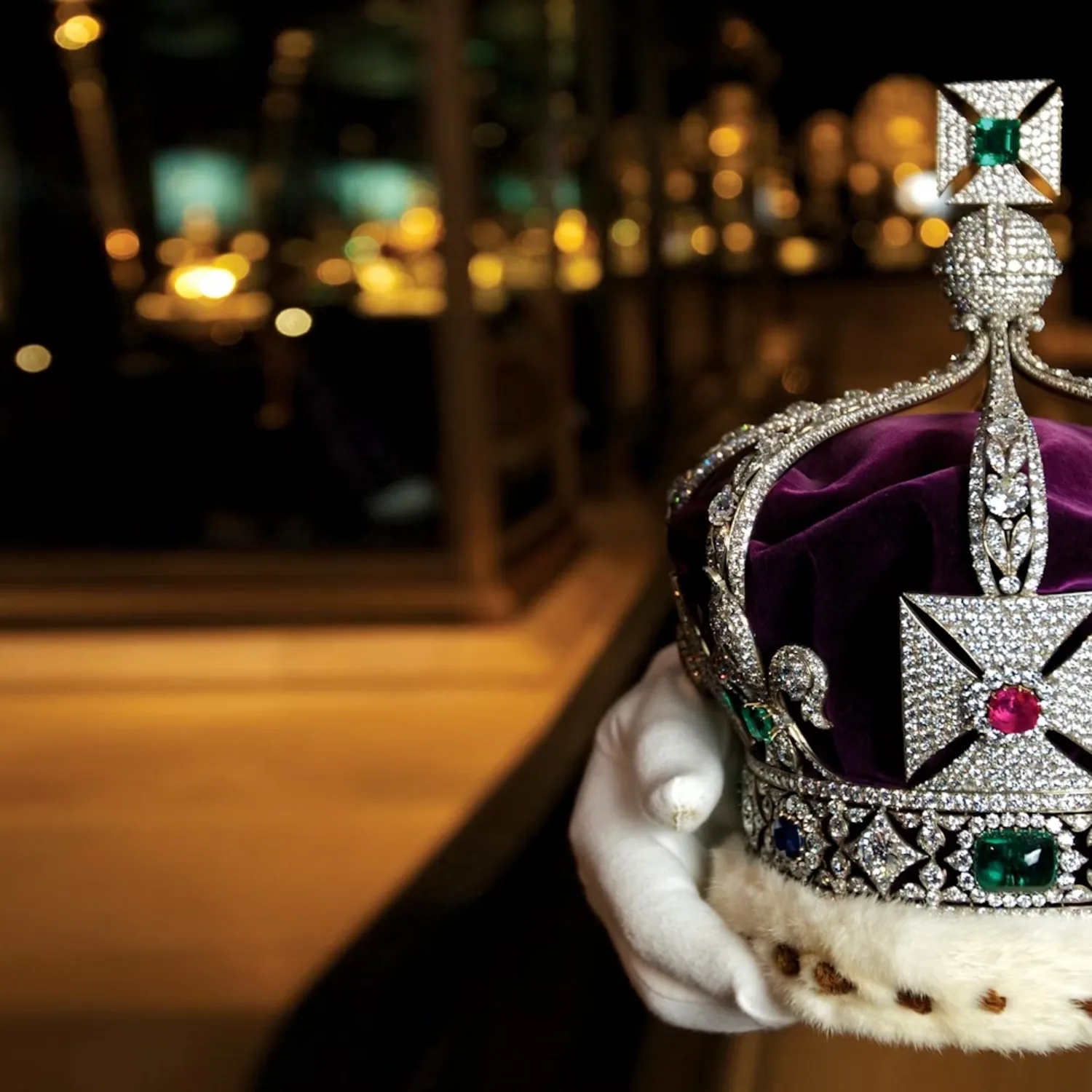
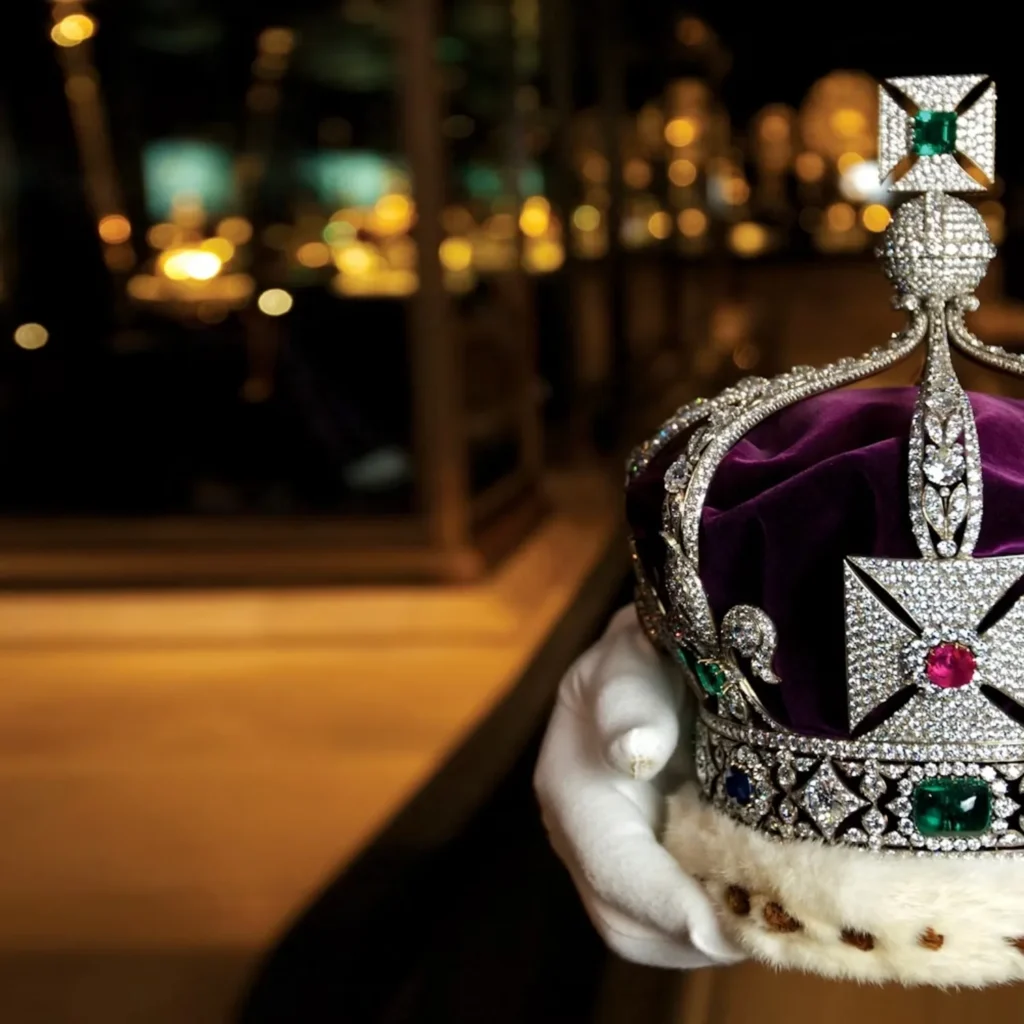
See the Crown Jewels, a highlight of the exhibition.

Admire the White Tower with Henry VIII’s oversized armor and London’s oldest church, St John’s Chapel.

Experience thrilling narratives about the Tower’s past, including imprisonment and executions.
Walking the Tower of London Room by Room

Every tower on this route, the White Tower, the Medieval Palace, the Bloody Tower and the Beauchamp Tower, is included with standard admission, as is the Jewel House. Arrive in your 30-minute slot and give yourself two or three hours, because the stairs and the queues at the smaller towers take time. Once you leave the gates, the ticket cannot be used again.

About this guide

Sources: Historic Royal Palaces, Tower of London accessibility; Historic Royal Palaces, Tower of London facilities and photography; Historic Royal Palaces, Tower Green scaffold site.

Questions About Inside the Tower of London

What is inside the Tower of London?

The White Tower with the Royal Armouries and St John's Chapel, the Medieval Palace, the Jewel House with the Crown Jewels, the Bloody Tower, the Beauchamp Tower and the Chapel Royal of St Peter ad Vincula.

Can you go inside the White Tower?

Yes. It is on standard admission. The stairs are steep, and the lift on the north side only reaches the basement shop.

Where is Henry VIII's armour?

In the Line of Kings in the White Tower. His tournament armour dates from around 1510 to 1515.

Why is it called the Bloody Tower?

It was the Garden Tower until rumours spread that the Princes in the Tower were killed there after 1483.

Who was imprisoned in the Bloody Tower?

Sir Walter Raleigh, for 13 years under James I. His rooms are dressed to show how he lived.

What are the carvings in the Beauchamp Tower?

Graffiti cut by prisoners, including Robert Dudley's flowers and leaves, Thomas Abel's bell and Philip Howard's inscription.

Was there really torture at the Tower of London?

Yes, but less than the legends say. There were 48 recorded cases between 1540 and 1640, and the rack was introduced in 1447.