We are processing your request.
Please, don’t close or refresh the page.
Westminster Abbey, London

Inside Westminster Abbey: The Coronation Chair, the Lady Chapel and the Chapter House

From the chair Edward I made for the Stone of Scone to Henry VII's fan-vaulted chapel and the octagon where Parliament once met, a walk through the Abbey's interior.

Westminster Abbey Layout: From the North Entrance to the Cloisters

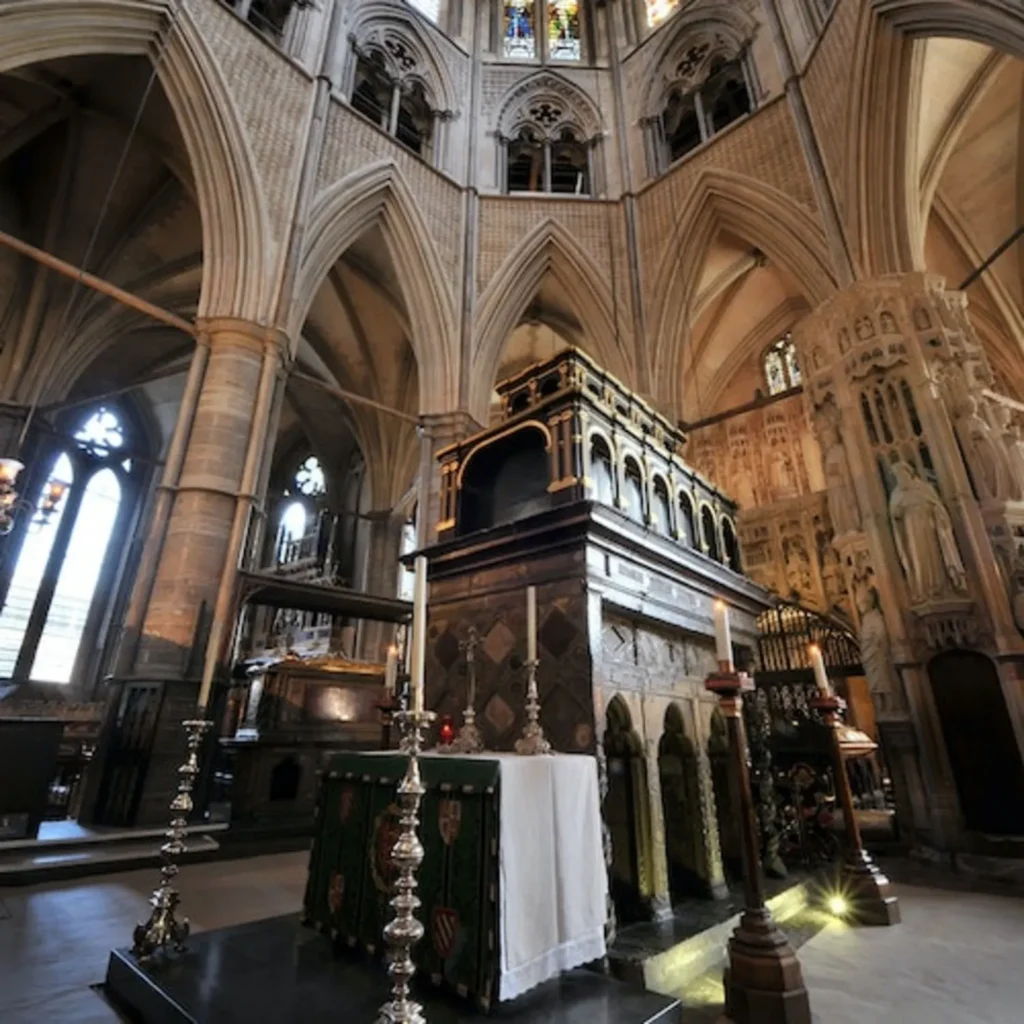
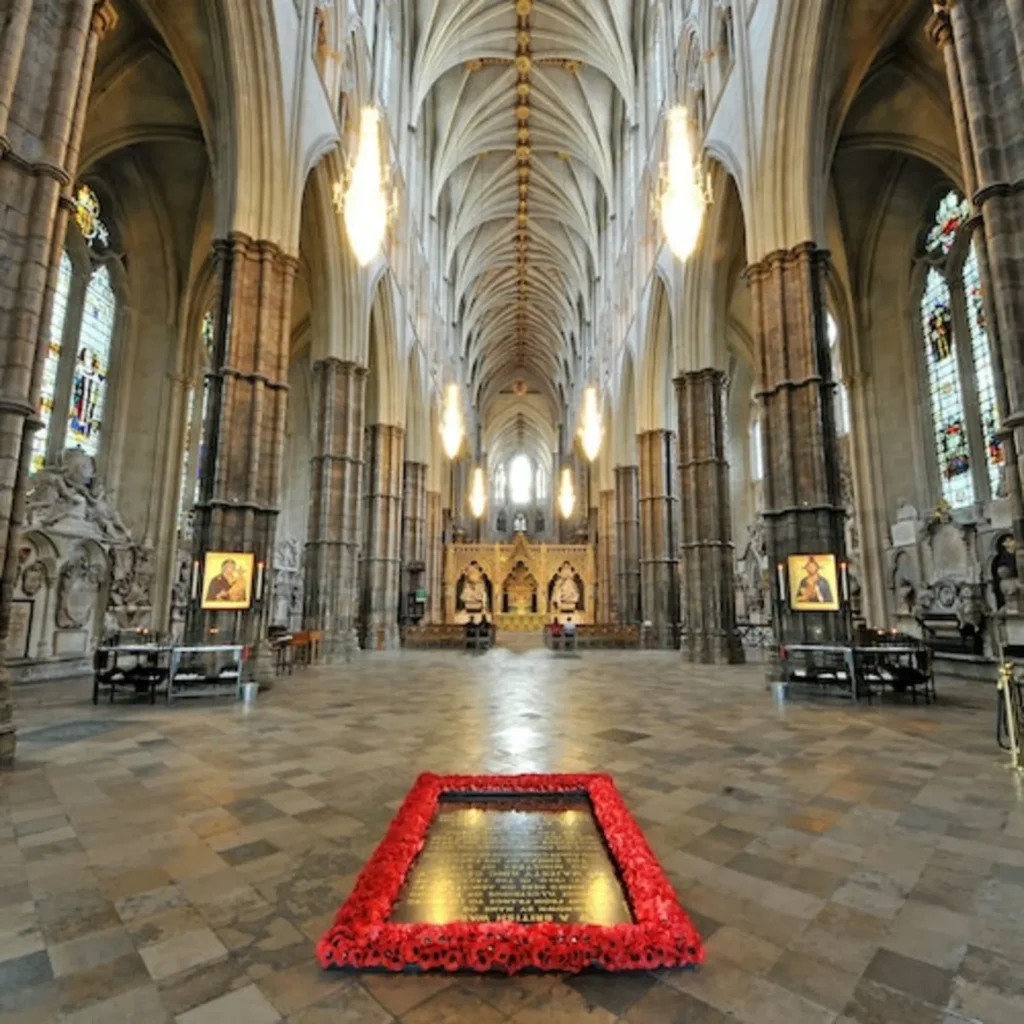
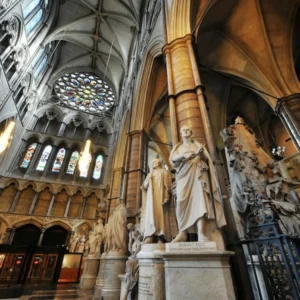
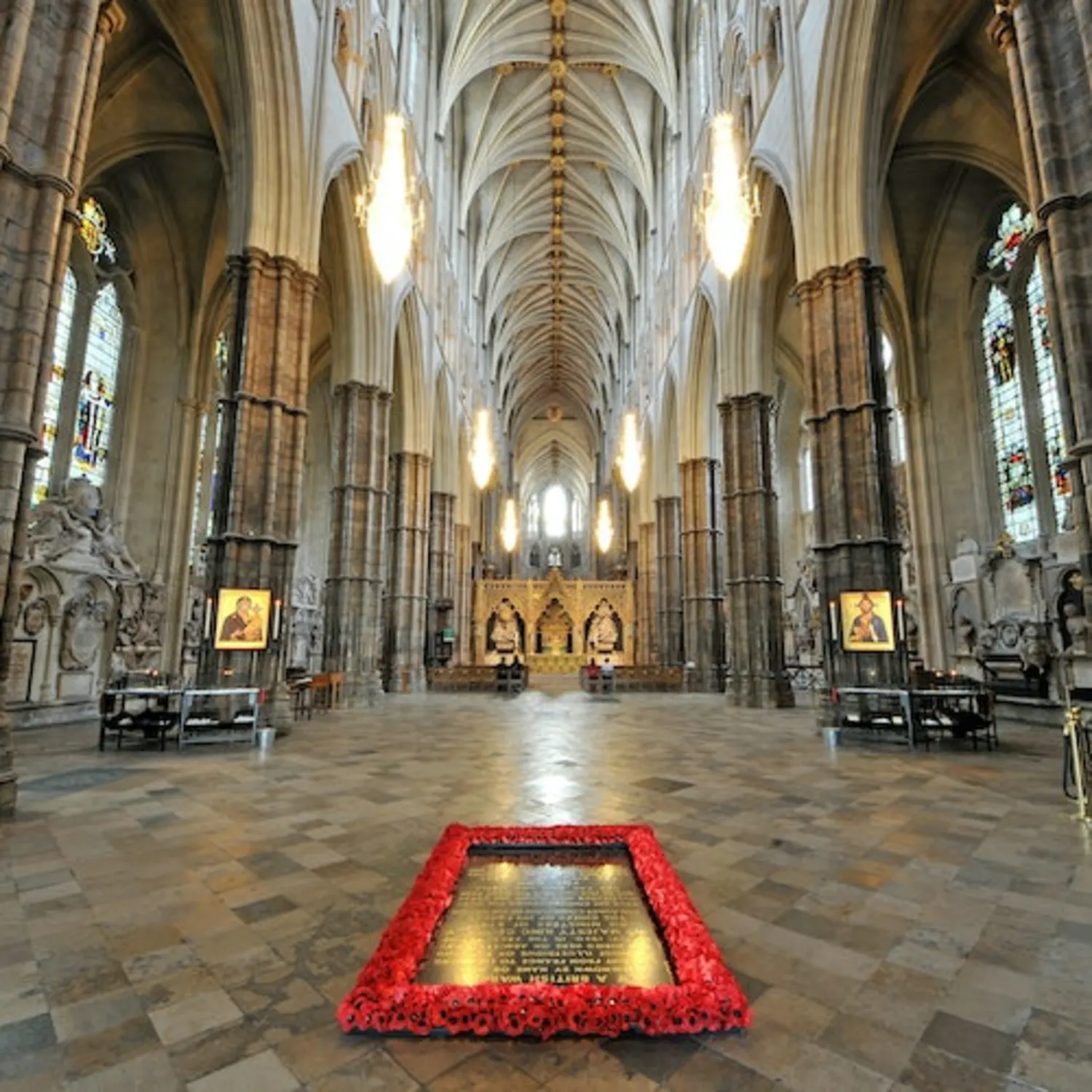
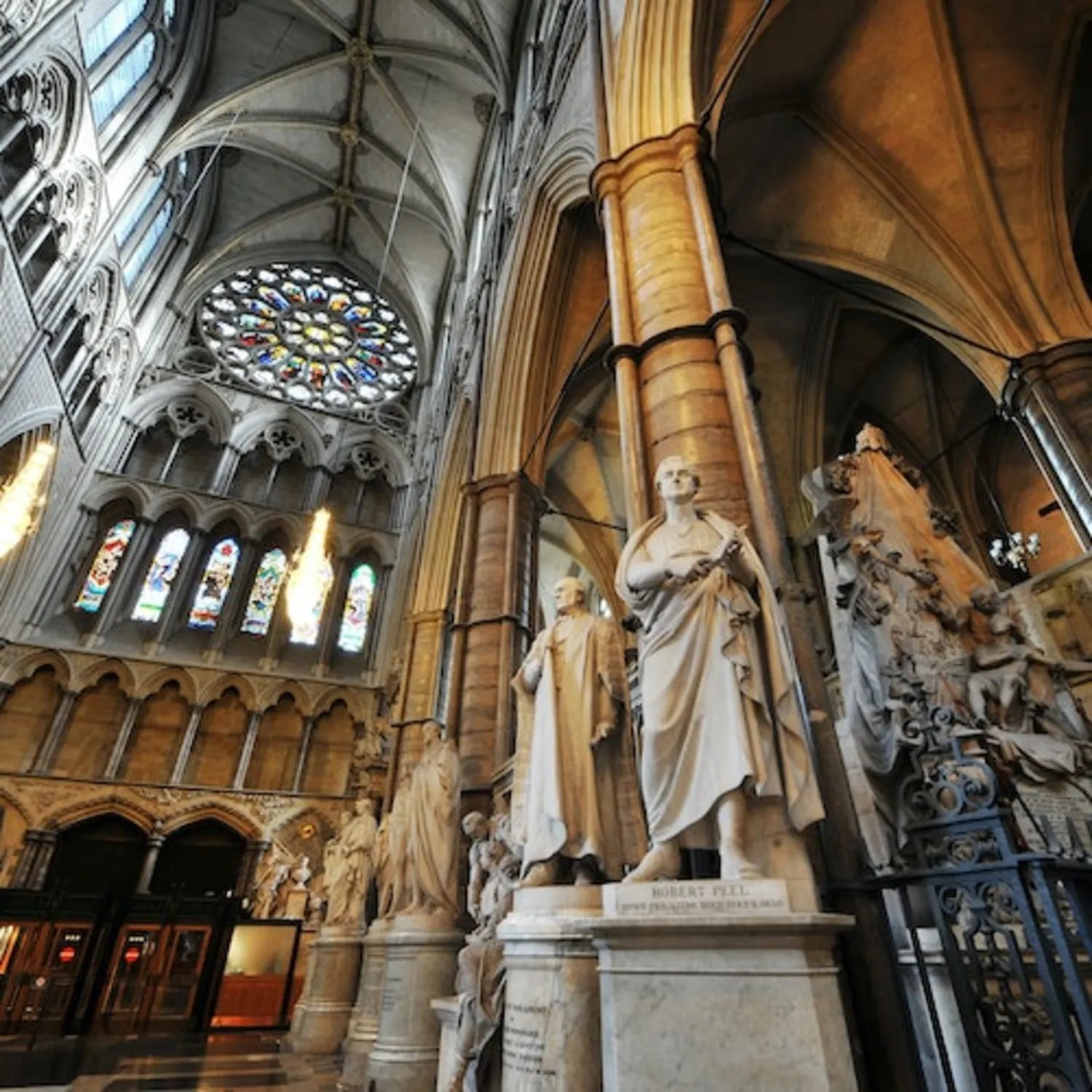
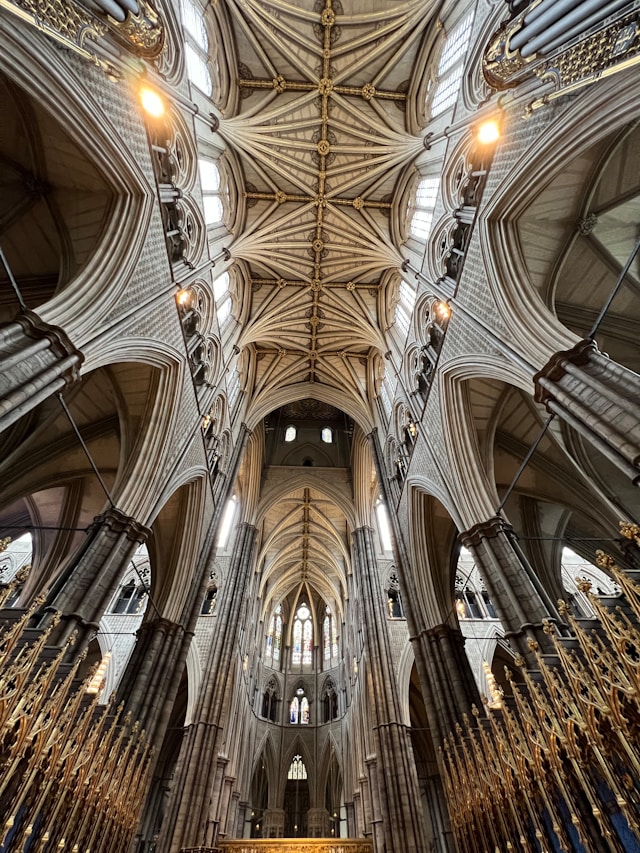
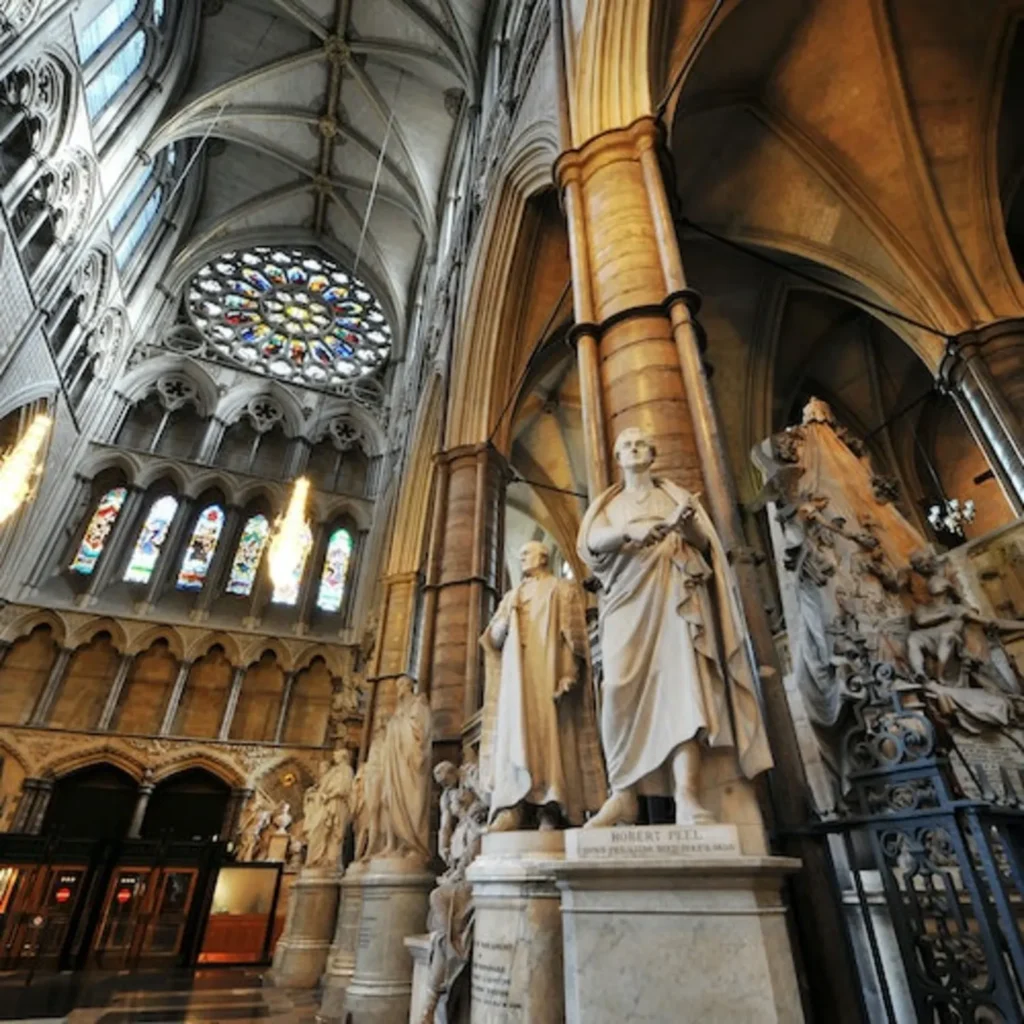
Inside Westminster Abbey is one long self-guided route through a working church. You go in by the North Entrance, and the route takes in the nave under the tallest Gothic vault in England, the quire and the High Altar, Henry VII's Lady Chapel at the east end, the South Transept and the cloisters, with the Chapter House and the Pyx Chamber opening off them.

Most of it is on one level, but the Lady Chapel, the side chapels, the cloisters and the Chapter House all have steps. For who founded the church and why it looks the way it does, read the story of the monks and kings behind it.

The Coronation Chair and the Stone of Scone
Westminster Abbey, London

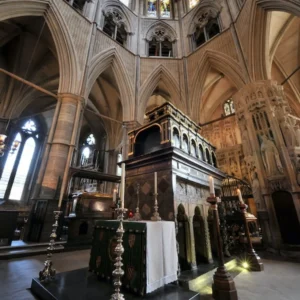
The most famous piece of furniture in the Abbey is a battered medieval chair. Edward I had it made around 1300 to hold the Stone of Scone, the stone Scottish kings were crowned on, which he had carried off from Scotland in 1296. Master Walter painted it with birds, foliage and animals on gilt, and almost every monarch since has been crowned sitting in it.

Look closely and you will see the damage. Westminster schoolboys and visitors carved their names into it in the 18th and 19th centuries, one of them boasting that he slept in the chair, and a suffragette bomb in 1914 broke off a corner.

The stone is no longer inside. Scottish nationalists took it on Christmas Day 1950, it was recovered the next year, and in 1996 it went back to Scotland. It is now kept at Perth Museum and comes back to Westminster for coronations. The empty chair stands in St George's Chapel at the west end of the nave, where visitors can see it.

Henry VII's Lady Chapel and Its Fan Vault
Westminster Abbey, London

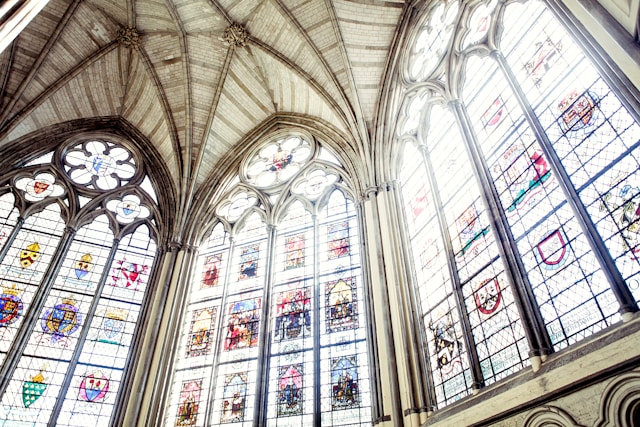
Henry VII began it in 1503 and it was finished in 1516, several years after his death, probably by the master masons Robert Janyns and William Vertue. Its fan-vaulted ceiling, with carved stone pendants hanging from it, is the thing to look up at.

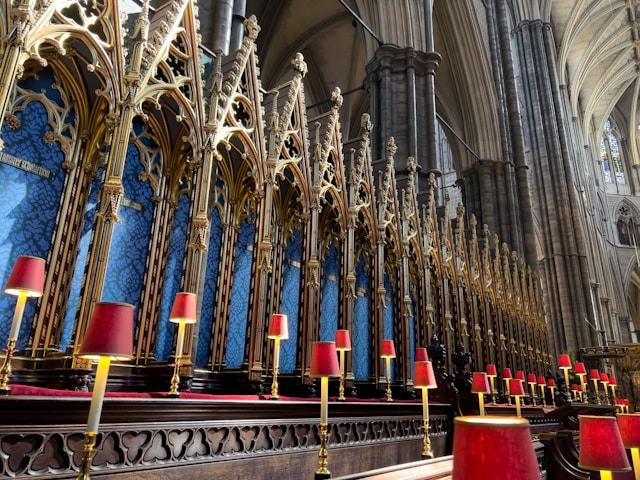
Around the walls stand some 95 statues of saints. Two show St Matthew wearing spectacles, and one is St Wilgefort, the bearded woman saint. Below them, the carved wooden stalls belong to the Knights of the Order of the Bath, installed here since 1725, and the bright banners overhead are those of living knights.

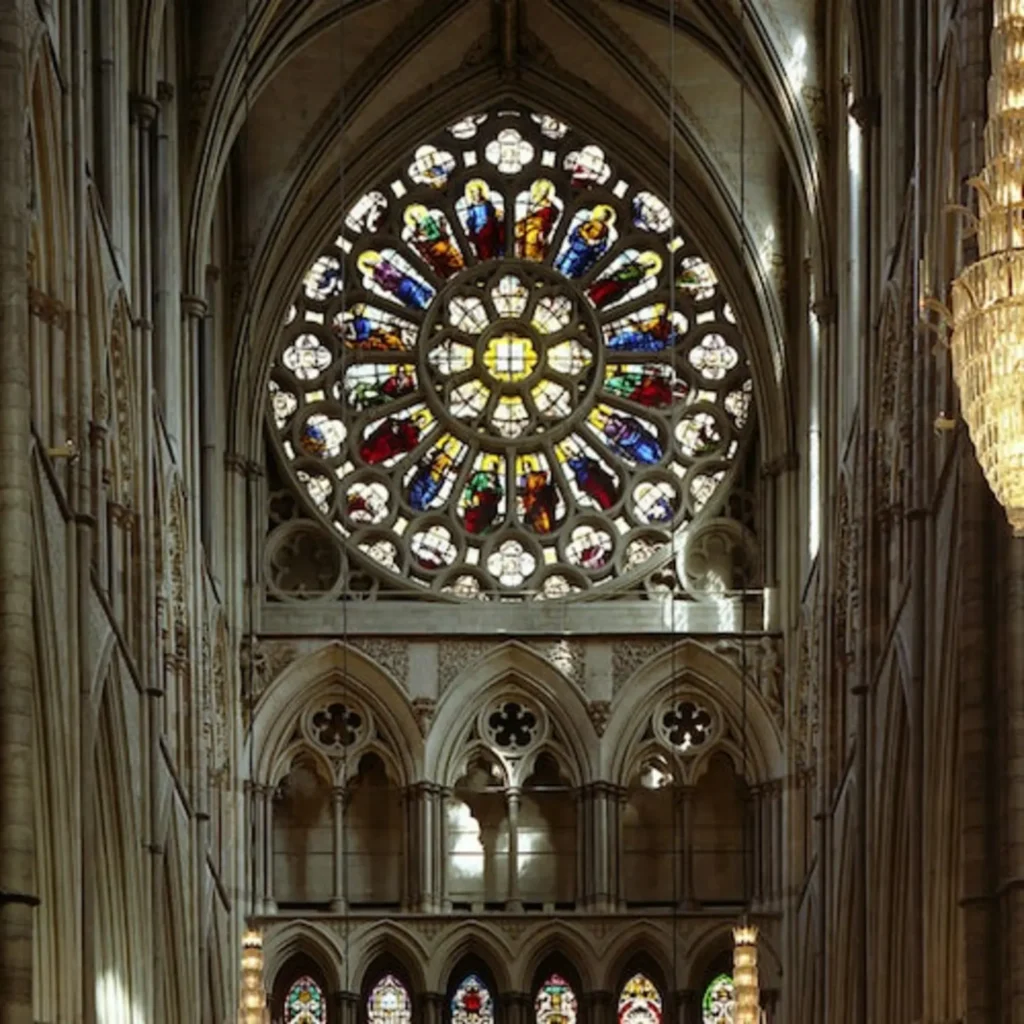
Hugh Easton's RAF window of 1947 carries the badges of the fighter squadrons of the Battle of Britain. The chapel is also full of royal tombs, from Henry VII's own to those of Elizabeth I and Mary Queen of Scots in the side aisles.

The Chapter House, the Cloisters and the Pyx Chamber
Westminster Abbey, London

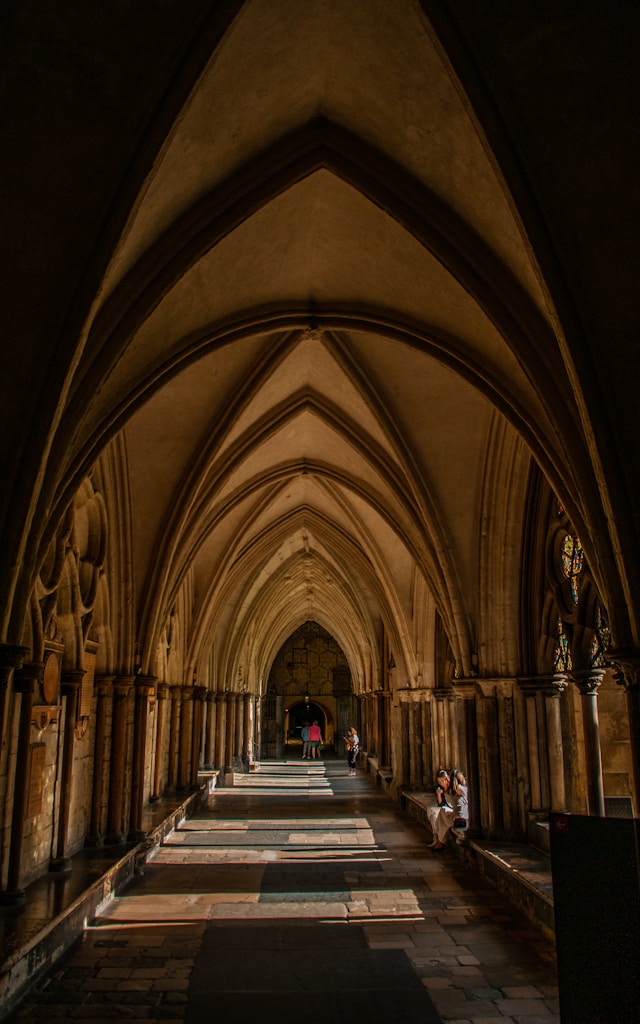
The monks met every day in the Chapter House, an octagon built between 1246 and 1255 with a single central pillar fanning out into the vault. Up to eighty of them sat around the walls to pray, hear the Rule of St Benedict read and deal with the abbey's business. In 1257 the King's Great Council met here, and in the 14th century so did the House of Commons.

The medieval tiled floor survives, with an inscription comparing the room to the rose: the flower of flowers, the house of houses. Wall paintings of the Apocalypse and a Last Judgement of about 1390 cover the arches, and the door on the way in is claimed to be the oldest in Britain, dating from the 1050s.

Next door, off the East Cloister, is the Pyx Chamber, built around 1070 and one of the oldest surviving parts of the Abbey. It was a royal treasury and later held the Exchequer's records, and its name comes from the Trial of the Pyx, the test of the coinage. The stone table used for it is still there, seen from a viewing platform at the entrance.

Westminster Abbey: Entry Ticket

Highlights

Explore the rich British heritage encapsulated within the Abbey’s walls.

Use an audio guide available in multiple languages to enhance your visit.

Witness the place of significant historical ceremonies including coronations and royal weddings.

Enjoy the freedom to move through the Abbey without time pressure.

Access one of the United Kingdom’s most important Gothic architectural landmarks.

Seeing the Abbey's Interior on Your Visit

The church, the Lady Chapel, the cloisters, the Chapter House and the Pyx Chamber are all on the standard sightseeing route, Monday to Saturday. The Queen's Diamond Jubilee Galleries are the exception and need their own timed ticket. Leave the flash and the selfie stick at home, and allow one and a half to two hours to see it all.
Inside Westminster Abbey: Your Questions

What is inside Westminster Abbey?

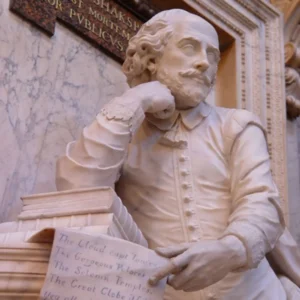
The nave and quire, the Coronation Chair, the Cosmati Pavement, Henry VII's Lady Chapel, the royal tombs, Poets' Corner, the cloisters, the Chapter House and the Pyx Chamber.

Where is the Coronation Chair?

In St George's Chapel, at the west end of the nave, where visitors can see it.

Is the Stone of Scone in Westminster Abbey?

Not any more. It returned to Scotland in 1996 and is kept at Perth Museum. It comes back to the Abbey for coronations.

Can you see the Lady Chapel?

Yes. Henry VII's Lady Chapel is on the standard route. There are steps up into it.

Are the Queen's Diamond Jubilee Galleries included in the ticket?

No. They need a separate timed ticket on top of standard admission.

Can you go inside the Chapter House?

Yes. It opens off the East Cloister and is on the standard route, although it has steps.

Can you take photos inside Westminster Abbey?

Yes, for personal use, without flash, video, tripods or selfie sticks. Photography is not allowed in the Shrine of St Edward, St Faith's Chapel or the Queen's Diamond Jubilee Galleries.

Is Westminster Abbey step-free inside?

Most of the route is. The Lady Chapel, side chapels, the Shrine of St Edward, the cloisters, the Chapter House and the Pyx Chamber have steps.

This website sells official tickets for this venue. Please note, however, that it is not the official website of the venue.

The images and videos on this website may contain visual elements that have been created or enhanced using AI technology. They are provided for illustrative purposes only.